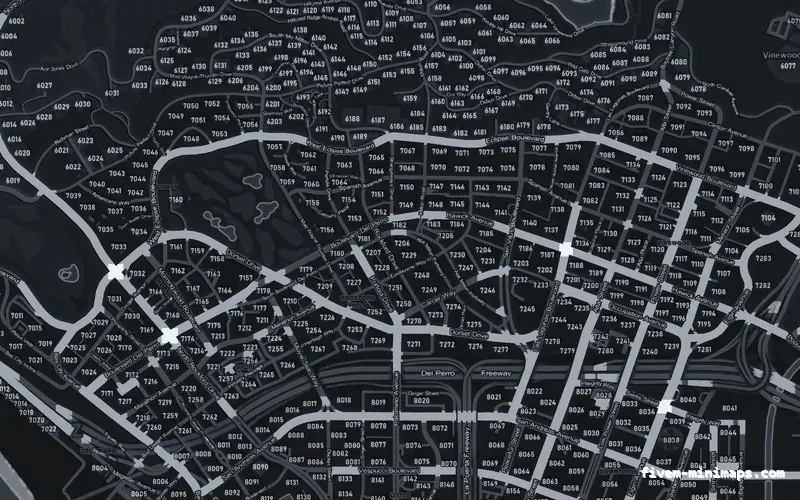
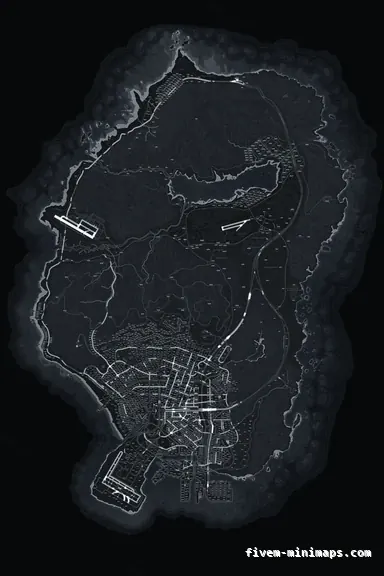
 Postal codes
GrayGRAPHITE
A quiet city map with numbers — the workhorse for long-form roleplay.
6144 × 9216 px · 78 files · with postal codes$8.00+ $1 / elementView
Every GTA V roleplay server is set in the same city, and no two of them use it the same way. Some live entirely inside a six-block area of downtown; some run half their scenes in Sandy Shores and the county; some have twelve years of history attached to a car park that Rockstar never named. The map is the shared object all of that hangs on, which makes it worth thinking about as a setting rather than as a navigation aid.
Three concrete recommendations rather than a shrug — with the reason attached.
Postal codesA quiet city map with numbers — the workhorse for long-form roleplay.
6144 × 9216 px · 78 files · with postal codes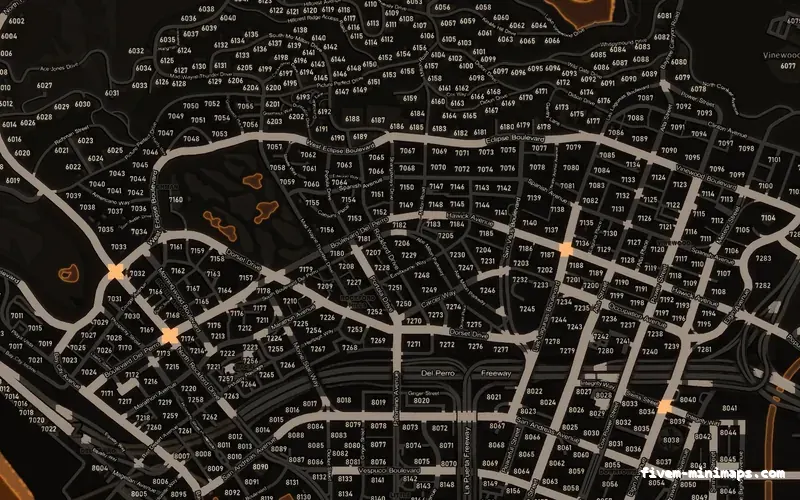
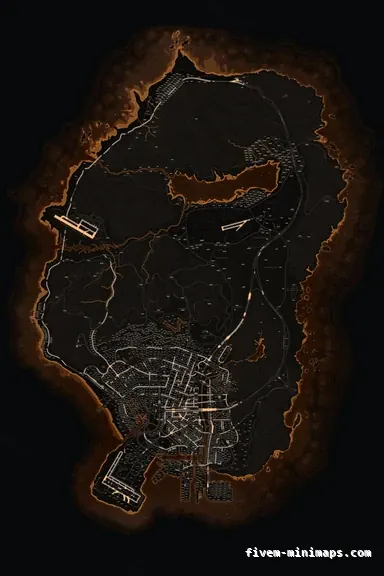 Postal codes
Warm and characterful without getting in the way of a scene.
6144 × 9216 px · 78 files · with postal codes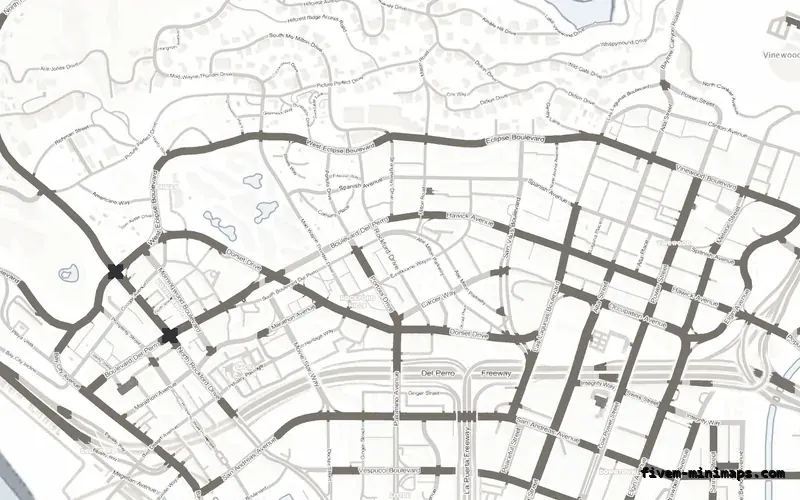
 No postals
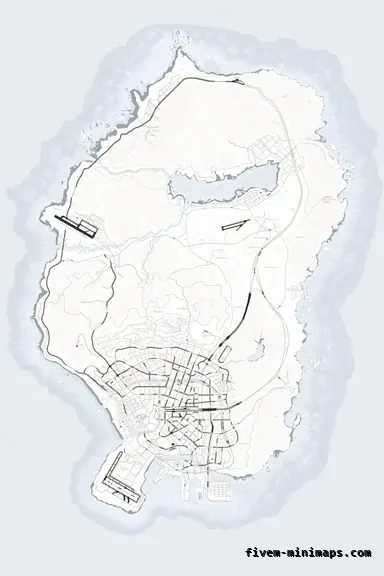
A paper city for servers where players read the map rather than glance at it.
6144 × 9216 px · 78 files · without postal codesRoleplay runs on people being able to tell each other where things are. Vinewood, Vespucci, Mirror Park, Grove Street, the docks, the Del Perro Pier — these work as shorthand because everyone in the scene has the same mental picture of them. A player who knows the city can say four words and put six people in the right place.
That vocabulary is learned from the map more than from driving. A new player builds their picture of Los Santos by opening the pause map, finding where they are, and slowly attaching names to the shapes. Every hour that takes is an hour they are worse at the thing your server is for.
It is also why a map that everybody sees matters more than a map that looks good. A server-streamed map means every conversation about location is happening over the same image — nobody is describing a landmark from a personal map mod that nobody else installed.
Most roleplay happens in a surprisingly small area: downtown, Mission Row, Pillbox, Legion Square, Vespucci and the strip of Vinewood above them. That is where the jobs, the hospital, the police station and most player businesses sit, and it is where a map needs to be legible at its most zoomed-in.
Then there is a second ring that gets used constantly but reads badly on most maps — Sandy Shores, Paleto, the Grapeseed farms, the routes between them. These are the areas with few roads, little landmark density and long distances, and they are where a flat map with no terrain leaves players genuinely lost.
And there is a third band that only matters to specific servers: the military base, the prison, the quarry, the offshore platforms, Chiliad. What each server needs is different, which is why there is no single correct level of detail — a city-only server and a county server want almost opposite things from the same map.
Long-running servers accumulate their own names for places, and most of them live only in Discord and in players' heads. A back lot becomes the meet spot, a stretch of road becomes a known drag strip, an unnamed block becomes a gang home. None of it is on the map, so a player who joined last week is permanently a step behind one who has been there a year.
Putting those names into the map art is one of the cheapest things a mature server can do for its own culture. A text element in the map type, placed where the name belongs, makes a piece of server folklore into a piece of geography — and a new player picks it up the first time they open the pause map instead of the fifth time somebody says it on radio.
The restraint worth keeping is that these should look like map labels rather than annotations. Set them in the same type, at a size that suits the area, and leave the real street names intact underneath — replacing Rockstar geography wholesale is how you end up with a map nobody can use to give directions to a new player who is reading the street bar.
For a roleplay server the priority order is: where am I, how do I get to the call, and where is the place someone just named. That means the street network and the district shapes first, the postal grid or the names second, and everything else after.
Terrain, landuse colour and contour detail are genuinely useful on county-heavy servers and mostly decoration on a downtown server. Neither is the wrong choice; what is wrong is picking the detailed map because it looks better in a product image and then finding it harder to read at the zoom your players actually use.
Open the live preview and look at any street on any theme before you spend a cent.